
Can India’s Deepest Transshipment Gateway Become South India’s Global Logistics Hub?
Sometimes, the significance of a port can be captured in a single container.
On 18 August, a container left Vizhinjam for Valencia, Spain. There was nothing remarkable about the box itself. What mattered was its journey.
It was not an international container arriving at Vizhinjam merely to be transferred from one vessel to another. It contained cargo produced in Kerala, exported through a Kerala port and loaded onto a vessel sailing directly to Europe.
For a port conceived decades ago and shaped by years of debate, failed bids, litigation and protest, that seemingly ordinary shipment represented something much larger.
Vizhinjam was beginning to move from being simply a transshipment port to becoming an actual gateway for Indian exports and imports.
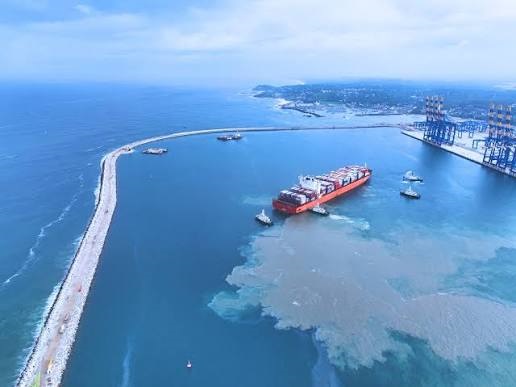
The speed of its initial growth has already attracted attention. According to the source document, Vizhinjam handled two million containers within its first 18 months of operations, with nearly 1,000 vessel calls—including some of the largest container ships in the world.
Yet container volumes alone do not answer the question that matters most for India’s logistics industry:
Can Vizhinjam become the global container and LCL consolidation hub South India has never had?
The answer begins with two advantages that cannot easily be replicated: depth and geography.
Why Vizhinjam Port Is Different From Most Indian Container Ports
For decades, a significant share of Indian transshipment cargo has travelled through foreign hubs such as Colombo, Singapore, Salalah and Jebel Ali.
Instead of loading onto a mainline vessel at an Indian port, containers are often moved by feeder vessel to an overseas transshipment hub, transferred to a larger mother vessel and then carried onward to their final destination.
That additional connection can mean more handling, additional transit time and greater dependency on foreign ports.
Vizhinjam was conceived as an answer to precisely this problem.
And nature has given it an unusual head start.
A Natural Draft Built for the World’s Largest Container Ships
Vizhinjam has a natural draft of approximately 20 metres, with even greater depth in parts of its channel.
That matters enormously.
Many ports must continuously dredge their channels to maintain sufficient depth for large vessels. Vizhinjam’s natural depth allows ultra-large container vessels to call with significantly fewer constraints.
Ships approximately 400 metres long and capable of carrying around 24,000 containers have already berthed there. The source notes that MSC Irina, described as the largest container ship afloat, called at Vizhinjam in June 2025.
But depth is only half the advantage.
Just 10 Nautical Miles From a Global Shipping Highway
Vizhinjam sits roughly 10 nautical miles from the main east-west shipping route connecting Europe, the Gulf, Southeast Asia and the Far East.
For a shipping line, deviation matters.
Every additional nautical mile means additional fuel, time and potential schedule disruption. A port positioned close to the mainline route therefore becomes substantially more attractive to mother vessels.
It is one of the reasons Colombo became such an important transshipment hub for Indian cargo.
Vizhinjam now sits on essentially the same maritime highway—with deeper water.
And when depth and location come together, something particularly important becomes possible.
Direct sailings.
Direct Sailings Could Change the Economics of South Indian Exports
When a mother vessel calls directly at an Indian port, cargo no longer necessarily needs to travel first to Colombo for transshipment.
That can mean fewer handovers, fewer connections and potentially shorter transit times.
Vizhinjam has already established direct connections with services covering Europe, the Mediterranean, Africa and South America. With EXIM operations opening, those connections become relevant not only to international transshipment cargo but also to Indian exporters and importers.
This is where Vizhinjam’s story becomes particularly important for South India.
Manufacturing and export clusters across Coimbatore, Tirupur, Karur, Salem, Bengaluru and Hyderabad generate substantial cargo. Yet the southern region lacks a comparable deep-water gateway directly on the principal east-west shipping lane.
Cargo frequently moves north toward Nhava Sheva or connects through Colombo from southern ports.
Vizhinjam could change that geometry.
Southern Tamil Nadu lies within relatively easy trucking distance, while the industrial belts around Tirupur and Coimbatore are within a day’s movement. With effective rail connectivity, Bengaluru and Hyderabad’s inland container depots could potentially enter Vizhinjam’s hinterland as well.
But there is another opportunity that deserves far more attention.
Vizhinjam’s Bigger Opportunity Could Be LCL Consolidation
For all the discussion around mega-ships and transshipment, one of Vizhinjam’s most strategically interesting opportunities involves much smaller shipments.
LCL—or Less than Container Load—cargo.
Thousands of MSMEs across South India export consignments too small to fill an entire container. These shipments need to be consolidated with cargo from other exporters before they can move efficiently to overseas markets.
Today, much of that cargo must travel to established consolidation centres or connect through overseas hubs.
Vizhinjam could potentially change this.
With a strong network of Container Freight Stations (CFSs) surrounding the port, Vizhinjam could develop into a major LCL consolidation gateway serving southern India.
The opportunity extends to buyer’s consolidation, e-commerce and FBA cargo, textiles, engineering goods and other time-sensitive exports.
This becomes particularly relevant for sectors such as fast fashion, where inventory cycles are extremely short and transit time can influence sourcing decisions.
But there is a major missing piece.
According to the source, Vizhinjam currently lacks the CFS ecosystem required to capture this opportunity, with its EXIM operation presently focused on FCL cargo.
Building that ecosystem could fundamentally change the port’s role.
Could Vizhinjam Become India’s International LCL Transshipment Hub?
There is an even more ambitious possibility.
Today, major hubs such as Colombo, Singapore and Jebel Ali can receive consolidated international LCL containers, open them, sort the individual shipments and rebuild new consolidations for different final destinations.
India has struggled to develop this model smoothly because of regulatory and operational constraints, including the absence of true free-zone environments suited to this activity.
Vizhinjam is still young enough to design for it.
The source proposes developing CFS infrastructure within a free-zone model, enabling multi-destination cargo to be destuffed, reorganized and reconsolidated into direct LCL services.
With mother-vessel connectivity already available, this could potentially allow Vizhinjam to attract LCL cargo not only from South India but also from other Indian ports and overseas origins.
That would move Vizhinjam beyond being simply another Indian container terminal.
It could create an entirely new LCL consolidation ecosystem involving freight forwarders, NVOCCs, warehouse operators, customs professionals, transporters and value-added logistics businesses.
For South India’s MSMEs in particular, the implications could be significant: shorter consolidation chains, access to direct sailings and potentially more competitive international freight solutions.
But there is a reason this opportunity remains a possibility rather than a certainty.
Four Challenges Vizhinjam Must Solve Before It Can Become a True Global Hub
The physical advantages are impressive. The operational questions are harder.
1. Vizhinjam May Be Deep Enough—but Is It Big Enough?
Vizhinjam’s first phase was designed for approximately one million TEUs, while Phase Two is expected to raise capacity to roughly 4.5–6 million TEUs by the end of 2028, according to the source document.
That would make Vizhinjam a significant regional gateway.
But global transshipment hubs operate at another scale.
The source contrasts that planned capacity with Colombo’s expansion ambitions and Singapore’s much larger throughput and capacity trajectory. Its argument is important: a six-million-TEU port can be strategically significant without necessarily becoming a dominant Indian Ocean hub.
The limiting factor is not water.
It is land.
The port occupies roughly 450 hectares, bordered by populated coastal communities and Thiruvananthapuram. Expansion beyond the existing plan could therefore require substantial reclamation or additional land acquisition.
The long-term question is consequently not simply how quickly Vizhinjam can expand.
It is what scale India ultimately wants Vizhinjam to achieve.
2. A Global Hub Needs Carrier Neutrality
Vizhinjam is operated under a long-term concession by Adani.
The source raises a strategic question around the single-operator model, contrasting it with hubs where multiple terminal operators create competition and give carriers alternative options.
Neutrality becomes even more important if a shipping line itself gains a significant economic interest in the terminal.
There can be obvious advantages: guaranteed volumes, investment capital and stronger mainline connectivity.
But there is also a risk.
A transshipment hub succeeds by attracting cargo from multiple competing carrier networks. If rival shipping lines perceive a terminal primarily as another carrier’s hub, they may choose to route transshipment cargo elsewhere.
The ideal outcome is therefore not merely high volumes.
It is high volumes with broad carrier participation.
3. The Hinterland Connection Remains the Critical Missing Link
A world-class berth cannot compensate for a weak landside network.
For Vizhinjam to become South India’s gateway, containers must reach it efficiently from manufacturing centres hundreds of kilometres inland.
The planned rail connection remains critical, as do the expressway and ring-road links needed to move freight without depending on congested urban roads. The source argues that until these connections exist on the ground, Vizhinjam’s ability to serve the broader South Indian cargo hinterland remains constrained.
For Bengaluru or Hyderabad cargo, the calculation is straightforward.
A shipper will use Vizhinjam only if the total logistics cost and transit time from factory to vessel makes commercial sense.
This is why port competitiveness cannot be measured at the quay alone.
4. The Logistics Ecosystem Must Grow Alongside the Terminal
Ports do not become hubs simply because ships arrive.
They become hubs because entire logistics economies develop around them.
Vizhinjam will need bonded warehousing, customs capacity, cold-chain infrastructure, freight stations, transport networks, container yards, consolidators and skilled logistics professionals.
For Kerala’s seafood exports, for example, cold-chain capability becomes particularly important. For MSMEs, neutral consolidation infrastructure becomes essential.
This surrounding ecosystem is what turns vessel calls into sustained economic activity.
A Five-Part Roadmap for Turning Vizhinjam Into South India’s Logistics Gateway
The source document proposes a clear sequence of priorities. Taken together, they provide a useful strategic framework for Vizhinjam’s next phase.
First, finish the hinterland connections.
Rail and expressway connectivity should be treated as core port infrastructure rather than separate transport projects. Dedicated container rail services connecting inland markets could materially expand Vizhinjam’s addressable cargo base.
Second, build a serious CFS and LCL consolidation ecosystem.
Multiple neutral CFS operators, bonded warehouses, cold-chain facilities and customs infrastructure could transform Vizhinjam into a consolidation centre rather than merely a container-handling terminal.
Third, protect carrier neutrality.
If carrier investment becomes part of the ownership structure, transparent tariffs, equal berth access and safeguards around capacity allocation could help maintain confidence among competing shipping lines. The source also proposes considering space for another terminal operator in a future expansion.
Fourth, decide the port’s ultimate scale now.
If Vizhinjam is intended eventually to compete with major Indian Ocean hubs, environmental studies, reclamation planning and engagement with coastal communities cannot begin after existing capacity is exhausted. These decisions require years of preparation.
Fifth, market Vizhinjam beyond Kerala.
The immediate cargo base includes Kerala’s cashew, marine products, spices, rubber and engineering exports. But the larger opportunity is South India.
A faster gateway can itself become part of the region’s export proposition. If overseas buyers know cargo can reach them more quickly through direct services, logistics becomes a competitive advantage for the manufacturers they source from.
What Vizhinjam Could Mean for Freight Forwarding in South India
For freight forwarders, the significance of Vizhinjam extends well beyond another port option.
A successful gateway could reshape cargo routing across southern India.
Direct mainline services could create new routing possibilities. Strong CFS infrastructure could support dedicated LCL consoles. Better hinterland connections could make Vizhinjam viable for cargo originating far beyond Kerala.
And if a free-zone consolidation model eventually develops, freight forwarders could potentially use Vizhinjam not simply for Indian exports but as a regional consolidation and redistribution point.
That would create opportunities across:
- LCL consolidation and deconsolidation
- Buyer’s consolidation
- Direct export consoles
- FBA and e-commerce logistics
- Cold-chain forwarding
- Multimodal transportation
- Bonded warehousing
- International transshipment
This is where the conversation moves from port development to logistics ecosystem development.
And that distinction matters.
Vizhinjam vs Colombo: The Real Competition Is Not About Depth
Vizhinjam already possesses something extraordinarily difficult to create: favourable geography.
Its natural depth and proximity to the east-west shipping route give it characteristics capable of attracting ultra-large container vessels.
But Colombo’s strength was never merely water depth.
It built connectivity, volume, carrier relationships, terminal infrastructure and an ecosystem around transshipment.
That is the real benchmark.
Vizhinjam therefore does not need to prove that large ships can berth there. That question has effectively been answered.
It must prove that cargo can reach those ships efficiently, that competing carriers can operate with confidence and that freight forwarders can build viable consolidation businesses around the port.
Vizhinjam Has the Sea on Its Side. Now It Needs the Supply Chain.
Return to that first Kerala container sailing directly to Valencia.
It represents what Vizhinjam could ultimately mean for South India: cargo originating locally, reaching a nearby gateway and joining a mainline vessel without unnecessary detours through distant domestic or foreign hubs.
The natural ingredients are unusually strong.
Deep water.
Proximity to the global shipping lane.
Access to ultra-large vessels.
Direct international services.
A substantial South Indian manufacturing hinterland.
But berths alone do not make a hub.
Rail connectivity does.
Expressways do.
Container freight stations do.
LCL consolidation networks do.
Carrier neutrality does.
And ultimately, the confidence of exporters, importers, shipping lines and freight forwarders does.
That is the central opportunity before Vizhinjam.
The port does not need to become another Colombo overnight. It needs to build the logistics ecosystem that makes South Indian cargo choose Vizhinjam naturally.
If that happens, India may finally do more than bring some of its transshipment cargo home.
It could create a new logistics gateway capable of changing how South India trades with the world.
Looking for Faster, More Flexible Ways to Move Your Cargo Globally?
As new gateways and direct shipping routes reshape Indian trade, exporters and importers need freight strategies that take advantage of changing connectivity.
From LCL consolidation and direct export consoles to ocean freight and international freight forwarding, Global Logistics helps businesses identify efficient routes, reduce unnecessary transshipment and build more agile supply chains.
Connect with our team at [email protected] to explore the right freight solution for your cargo and destination.