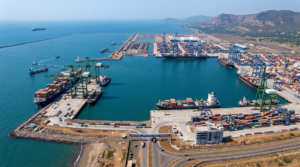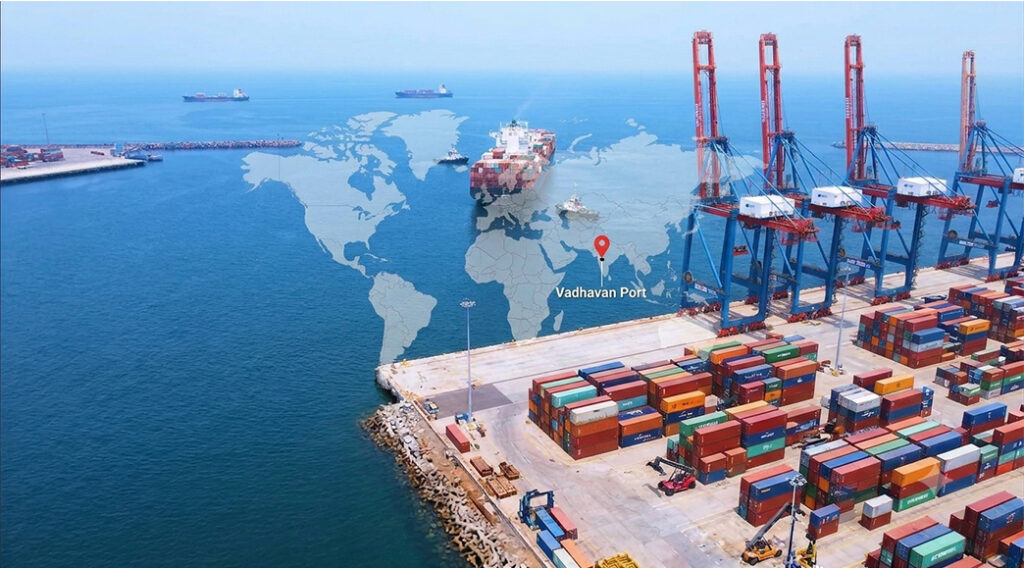
India’s upcoming Vadhavan Port has all the ingredients to become one of the world’s largest deep-water ports. But size alone does not create a global logistics hub. History has shown that ports such as Singapore, Jebel Ali and Colombo became leaders not because of their physical infrastructure, but because they built efficient ecosystems that made global trade faster, cheaper and more predictable.
For Vadhavan to transform India’s maritime ambitions into reality, the focus must extend beyond building berths and breakwaters. It must create an integrated logistics ecosystem that attracts shipping lines, freight forwarders, manufacturers and global traders.
1. Build World-Class Connectivity Before Operations Begin
One of the biggest lessons from existing Indian ports is that supporting infrastructure cannot be an afterthought. Efficient highways, rail connectivity, truck appointment systems and coordinated berth planning should be operational before the first vessel arrives.
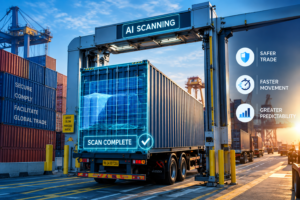
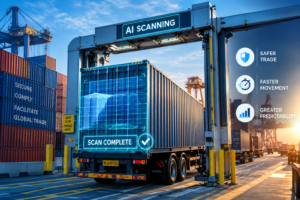
Digital visibility across terminals, common traffic management and better coordination between Container Freight Stations (CFSs) can significantly reduce congestion while improving cargo turnaround times. Efficient inland connectivity will be just as important as the port itself.
2. Create a Free Trade and Warehousing Zone
Global transshipment hubs thrive because cargo moves with minimal administrative friction.
A dedicated Free Trade and Warehousing Zone (FTWZ) around Vadhavan would allow international cargo to be stored, consolidated, sorted and re-exported without repeated customs interventions. This simplifies operations for shipping lines while making India a far more attractive transshipment destination.
For importers, exporters and freight forwarders, faster cargo movement translates into lower logistics costs and greater supply chain reliability.
3. Invest in Large-Scale, Affordable Warehousing
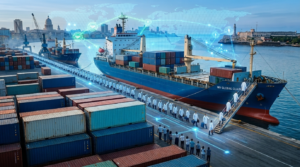
The world’s leading ports have evolved into integrated logistics ecosystems where cargo is stored, processed and distributed—not merely transferred between ships.
Vadhavan has the opportunity to develop extensive warehousing infrastructure for industries such as pharmaceuticals, chemicals, electronics, metals and agricultural commodities. Competitive storage costs and modern logistics parks can encourage businesses to position inventory closer to international shipping routes, creating long-term trade volumes and value-added logistics services.
4. Capture India’s Lost Transshipment Business
A significant share of India’s international container cargo is currently transshipped through foreign ports before reaching its final destination.
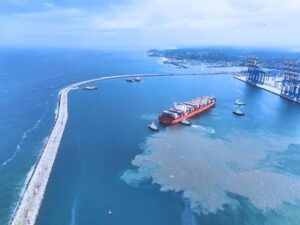
With its natural deep draft, Vadhavan can accommodate ultra-large container vessels while serving as a regional hub for cargo destined for South Asia, the Middle East, East Africa and Southeast Asia.
Retaining this cargo within India would generate additional port revenues while strengthening the country’s position in global maritime trade.
5. Build South Asia’s Leading LCL Consolidation Hub
For thousands of small and medium exporters, Less than Container Load (LCL) shipping remains the most cost-effective way to access international markets.
A dedicated LCL ecosystem at Vadhavan—supported by multiple CFS facilities, bonded warehousing, rail connectivity and seamless cargo movement—would create larger consolidation volumes and enable more direct export services.
Instead of relying on overseas consolidation hubs, India could become the preferred regional centre for LCL cargo, benefiting exporters across multiple industries.
6. Integrate Sea-Air Logistics from the Beginning
As plans for a new international airport near the Vadhavan region progress, India has a unique opportunity to create an integrated sea-air logistics corridor.
High-value, time-sensitive cargo such as pharmaceuticals, electronics and engineering goods could move seamlessly from ships to aircraft through bonded logistics facilities, reducing transit times while expanding India’s multimodal logistics capabilities.
7. Develop the Entire Coastline as One Logistics Network
Rather than viewing Vadhavan as a standalone project, policymakers should integrate it with Maharashtra’s existing ports, coastal shipping infrastructure and logistics network.
Smaller ports can serve as feeder hubs while Vadhavan functions as the primary gateway for international container traffic. This would reduce pressure on highways, encourage coastal shipping and distribute economic growth across the state’s coastline.
8. Market Vadhavan as a Global Logistics Brand
Even the world’s best infrastructure requires active commercial promotion.
Shipping lines, freight forwarders and multinational manufacturers need confidence in operational efficiency, competitive tariffs and service reliability before redesigning global shipping networks.
Dedicated international marketing, transparent pricing, guaranteed productivity and strong customer engagement will be essential to positioning Vadhavan alongside established global logistics hubs.
Looking Beyond a Port
The greatest opportunity lies in creating more than just another container terminal.
By integrating world-class port infrastructure with free trade zones, logistics parks, multimodal connectivity, warehousing, coastal shipping and financial services, Vadhavan can become a complete trade ecosystem that supports India’s ambition of becoming a global manufacturing and export powerhouse.
Success will ultimately depend not on the size of the harbour, but on the efficiency of the ecosystem built around it.
Conclusion
Vadhavan has the potential to redefine India’s position in global maritime trade. However, achieving that vision will require strategic planning that extends beyond port construction to include logistics infrastructure, policy reforms, digital integration and commercial execution.
If India successfully combines these elements, Vadhavan can evolve from being one of the country’s largest ports into one of the world’s most competitive logistics and transshipment hubs—creating new opportunities for importers, exporters, freight forwarders and global supply chains alike.