Twenty metres. That is the number that could change India’s position in global maritime trade.
On Maharashtra’s western coastline, approximately 150 kilometres north of Mumbai, one of India’s most ambitious maritime infrastructure projects is taking shape.
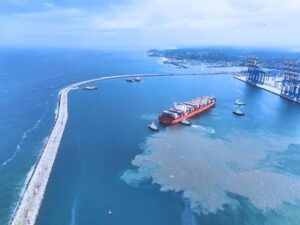
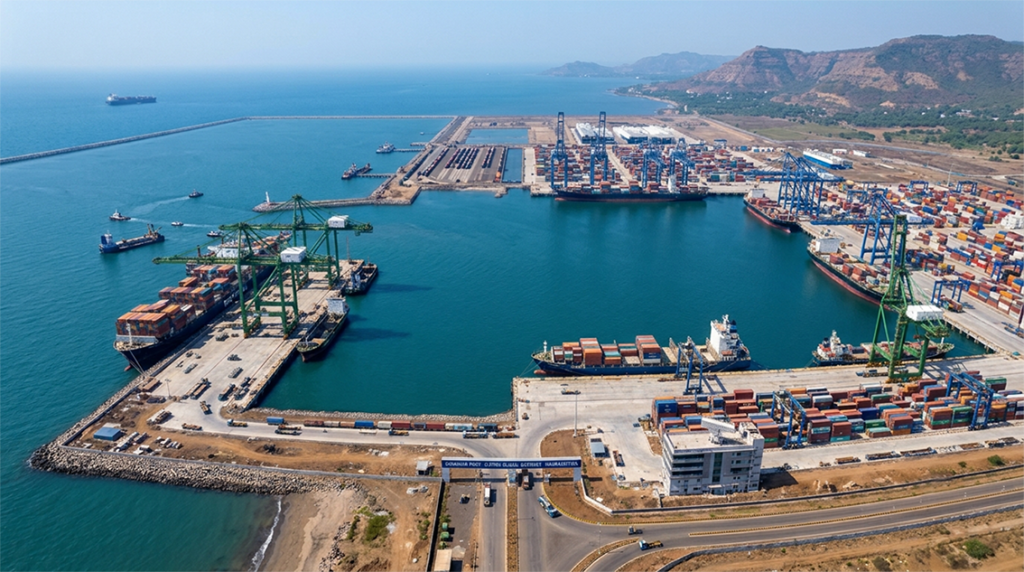
Near the fishing village of Vadhavan in Palghar district, India is developing a deep-water port designed to accommodate some of the world’s largest container vessels, connect directly with major industrial corridors and significantly expand the country’s container-handling capacity.
The proposed investment is approximately ₹76,220 crore. At full development, Vadhavan Port is designed to handle around 23.2 million TEUs annually, a scale comparable to India’s current nationwide container throughput.
But the real significance of Vadhavan Port goes beyond its size.
It could change how Indian cargo connects with international shipping networks, reduce dependence on overseas transshipment hubs and create new opportunities for exporters, importers, shipping lines and freight forwarders.
The opportunity is enormous. So are the execution challenges.
Can Vadhavan become the deep-water gateway that transforms India from a major trading economy into a major global maritime hub?
The answer begins with a seemingly small difference in water depth.
Why Does India Need Another Major Container Port?
India already operates some of the busiest container gateways in South Asia.
Jawaharlal Nehru Port Authority (JNPA), commonly known as Nhava Sheva, remains one of the country’s most important container ports. Its annual throughput has exceeded 7 million TEUs, reflecting the steady expansion of India’s international trade.
Further north, Mundra Port in Gujarat has developed into another major container gateway, supporting manufacturing, imports and exports across western and northern India.
Together, these ports play a central role in connecting Indian businesses with global markets.
So why invest in another large container port?
Because India’s existing port infrastructure must support a trading economy with ambitions far greater than its present scale.
As manufacturing expands, container volumes increase and shipping lines deploy larger vessels, the limitations of existing infrastructure become increasingly important.
JNPA operates within a heavily developed metropolitan region where additional land and transport connectivity are constrained. Mundra continues to expand, but its geographic location creates different inland transportation requirements for various manufacturing clusters.
Both ports remain vital to India’s maritime network.
However, the country’s future trade growth requires additional capacity, improved hinterland connectivity and infrastructure capable of handling the largest generation of container ships.
Vadhavan is being developed to address precisely these requirements.
The 20-Metre Advantage: Why Port Depth Changes Shipping Economics
The most important feature of Vadhavan Port is its proposed deep-water capability.
The site offers approximately 20 metres of natural water depth, compared with around 15 metres at JNPA and varying depths across Mundra’s terminals.
A difference of a few metres may sound insignificant.
In container shipping, however, it can influence which vessels a port can accommodate and how efficiently cargo moves through international networks.
Why Do Large Container Ships Need Deep-Water Ports?
The world’s largest container vessels can carry more than 24,000 TEUs.
These ships require substantial water depth at the berth, along navigation channels and throughout their approach to the port.
Port access also depends on vessel draft, tidal conditions, channel design, manoeuvring space and terminal infrastructure.
A port that cannot safely accommodate a particular vessel may be excluded from that vessel’s service rotation.
Instead, shipping lines may use smaller feeder vessels to transport containers to a regional hub where they are transferred onto larger mother vessels.
This creates an additional movement within the international supply chain.
Vadhavan’s deep-water design is intended to enable more direct calls by large mainline vessels, potentially improving India’s integration with major international shipping routes.
The strategic value of 20 metres is not simply deeper water. It is the possibility of bringing larger global shipping services directly to India’s coastline.
How Vadhavan Port Could Reduce India’s Dependence on Foreign Transshipment Hubs
For decades, a portion of India’s international container cargo has moved through overseas transshipment hubs.
Ports such as Colombo, Singapore, Salalah and Jebel Ali play important roles in connecting regional cargo with long-distance shipping services.
When an Indian port is not included in a mainline vessel rotation, containers may travel on feeder services before being transferred to larger ships.
This system is an established part of global container shipping and can be efficient when volumes and network economics justify it.
However, transshipment also introduces additional handling, scheduling dependencies and potential points of disruption.
A missed connection at a transshipment hub can delay cargo even when the initial feeder vessel operates on schedule.
For importers and exporters, these additional connections can complicate shipment planning and delivery predictability.
Vadhavan could help change the equation.
By accommodating larger vessels and supporting substantial cargo volumes, the port may become an attractive direct-call gateway for international shipping lines.
If carriers establish competitive mainline services, some cargo currently routed through overseas hubs could potentially move more directly between India and global markets.
That could reduce certain transshipment-related costs and dependencies while strengthening India’s position in international maritime networks.
However, direct services will depend on more than water depth.
Shipping lines must also see sufficient cargo volumes, efficient terminal operations, competitive charges and reliable inland connectivity.
A deep-water port creates the opportunity for direct connectivity.
Commercially attractive shipping networks are what turn that opportunity into reality.
Inside the ₹76,220 Crore Vadhavan Port Project
The Union Cabinet approved the Vadhavan Port project on 19 June 2024, with an estimated investment of approximately ₹76,220 crore.
The foundation stone was laid in August 2024.
The project is being developed by Vadhavan Port Project Limited, a joint venture between JNPA, holding 74%, and the Maharashtra Maritime Board, holding 26%.
The planned infrastructure is substantial.
At full development, Vadhavan is designed to include nine container terminals, each approximately 1,000 metres long, alongside facilities for multipurpose cargo, liquid cargo and roll-on/roll-off operations.
The project also involves extensive land reclamation and construction of a major offshore breakwater.
Approximately 1,448 hectares of land are proposed to be reclaimed, with a breakwater extending around 10.14 kilometres.
The first phase has been targeted for development around 2029–2030, subject to construction progress, regulatory requirements and supporting infrastructure.
At full capacity, the port is designed to handle approximately 23.2 million TEUs annually.
To understand the significance of that number, consider that it is broadly comparable to the current combined annual container throughput of India’s ports.
Vadhavan is therefore not simply an expansion of existing capacity.
It represents an attempt to create a major new gateway for India’s long-term trade requirements.
Five Strategic Advantages That Could Make Vadhavan a Global Maritime Hub
Port capacity alone does not determine competitiveness.
The world’s leading container ports succeed because they combine vessel accessibility, efficient terminals, reliable inland connectivity and strong commercial ecosystems.
Vadhavan’s development strategy incorporates several of these advantages.
1. Deep-Water Access for Ultra-Large Container Vessels
Vadhavan’s approximately 20-metre natural depth is its most distinctive feature.
This offers the potential to accommodate ultra-large container vessels that require deeper water than many existing Indian berths can provide.
Larger ships benefit from economies of scale, allowing shipping lines to spread certain operating costs across greater container capacity.
For Indian exporters and importers, direct access to these services could potentially improve international shipping connectivity and reduce reliance on feeder networks.
Natural depth may also reduce some dredging requirements, although the actual long-term maintenance needs will depend on the port’s final design and operating conditions.
The broader advantage is the ability to develop infrastructure for the next generation of global container shipping.
2. Connectivity to the Western Dedicated Freight Corridor
A world-class port must move containers efficiently beyond the terminal gate.
Vadhavan is planned to connect with the Western Dedicated Freight Corridor through the New Palghar area.
This freight-focused railway network is designed to support high-capacity container movement between western India and northern industrial and consumption centres.
Unlike conventional mixed-use railway networks, dedicated freight corridors allow cargo trains to operate with fewer conflicts involving passenger services.
The infrastructure also supports double-stack container train operations on suitable sections.
For importers and exporters, this could improve inland transportation efficiency and create opportunities for more reliable cargo movement between ports, manufacturing clusters and logistics facilities.
The real benefit will depend on how effectively the port’s rail connection integrates with terminals, inland container depots and existing freight networks.
3. Proximity to Maharashtra and Gujarat’s Manufacturing Belt
Vadhavan’s geographic position is another major advantage.
The port is being developed between Maharashtra and Gujarat, two of India’s most important industrial and export-oriented states.
Together, these states account for a substantial share of India’s merchandise exports.
Nearby industrial centres include Tarapur and Boisar, while important manufacturing clusters extend towards Vapi, Valsad, Silvassa and Surat in the north, and Mumbai, Thane and Pune in the south.
These regions support industries such as chemicals, engineering, textiles, pharmaceuticals, steel and other manufactured products.
For businesses in these sectors, proximity to a large international container gateway can influence inland freight costs, transportation planning and access to shipping services.
Vadhavan’s location creates an opportunity to serve existing industrial activity while supporting future manufacturing growth.
4. Access to Major Expressway Networks
Road connectivity will be essential to Vadhavan’s commercial success.
A proposed 32.1-kilometre access-controlled expressway is intended to connect the port with NH-48 and the Delhi–Mumbai Expressway network.
The project has been associated with an estimated investment of approximately ₹2,360 crore and includes provisions for future capacity expansion.
A separate freight corridor of approximately 105 kilometres has also been proposed to connect Vadhavan with the Samruddhi Expressway near Bharvir in Nashik district.
Together, these connections could improve access to major industrial regions across Maharashtra, Gujarat and northern India.
For road freight operators, the potential benefits include reduced dependence on congested urban routes, improved journey planning and more efficient movement between the port and inland destinations.
However, these advantages will depend on timely completion of the connecting infrastructure.
A port may be ready to receive vessels, but without sufficient road and rail capacity, congestion can simply move from the waterfront to the hinterland.
5. Multiple Terminal Operators and Greater Competition
Vadhavan is planned around a landlord-port model.
Under this structure, common port infrastructure is developed by the port authority, while individual terminals can be operated by private companies under long-term concession arrangements.
This approach is already used at major international ports, including JNPA.
The project has attracted interest from prominent global shipping and terminal businesses, including companies associated with MSC, HMM, DP World, PSA, APM Terminals and CMA CGM.
The presence of multiple operators could create competition around terminal efficiency, service quality and commercial offerings.
For shipping lines and cargo owners, a competitive terminal ecosystem may provide greater choice.
However, the eventual benefits will depend on concession structures, operating efficiency, capacity utilisation and commercial conditions.
Competition creates incentives.
Efficient operations determine whether those incentives translate into better outcomes for trade.
What Vadhavan Port Could Mean for Freight Forwarders
For the freight forwarding industry, Vadhavan could create a significant shift in India’s western coastal logistics network.
Today, much of the container freight ecosystem serving the Mumbai region is concentrated around Nhava Sheva.
Over several decades, this area has developed an extensive network of container freight stations, empty container depots, customs brokers, transport operators, warehouses, shipping agents and freight forwarders.
These supporting businesses are critical to the movement of international cargo.
Vadhavan could eventually create a second major logistics ecosystem along Maharashtra’s coastline.
But that transition will require careful planning.
Freight forwarders will need to evaluate how shipping services are distributed between JNPA and Vadhavan, how container equipment is positioned and where cargo consolidation and deconsolidation activities take place.
Inland transport routes may change.
Warehouse locations may become more important.
Customer routing decisions may need to be reassessed.
And shipping lines could adjust their vessel rotations as Vadhavan develops commercial scale.
For freight forwarders, the opportunity lies in helping customers navigate these changes without creating unnecessary disruption to existing supply chains.
Why Vadhavan Could Reshape LCL Consolidation in Western India
The implications for Less than Container Load (LCL) consolidation are particularly interesting.
LCL shipping allows multiple smaller consignments to share container space, providing an economical international freight option for businesses that do not require an entire container.
But successful LCL operations depend on much more than vessel availability.
They require reliable cargo collection, consolidation facilities, accurate documentation, dependable shipping schedules and efficient destination deconsolidation.
Today, a significant part of western India’s LCL ecosystem is built around established container freight stations and consolidation facilities serving JNPA.
As Vadhavan develops, the industry may need to evaluate whether new consolidation hubs should be established closer to the port or whether existing facilities can continue serving both gateways efficiently.
This creates several important operational questions.
Will shipping lines offer direct LCL-relevant services from Vadhavan?
How will containers move between existing CFS facilities and the new terminals?
Where will empty containers be positioned?
Will additional inland transportation offset potential savings from improved mainline connectivity?
And how quickly can customs, warehousing and consolidation services develop around the new port?
These are not minor operational details.
They will influence whether Vadhavan delivers genuine commercial advantages for smaller importers and exporters.
A new port creates capacity. A mature logistics ecosystem makes that capacity accessible.
For LCL consolidators and freight forwarders, the transition could create opportunities to develop new services, improve cargo routing and expand connectivity to global markets.
Can Vadhavan Reduce Ocean Freight Costs for Indian Businesses?
One of the most important questions for importers and exporters is whether Vadhavan will make international shipping more economical.
The answer is potentially yes, but not automatically.
Deeper berths could attract larger vessels, and direct mainline services may reduce the need for certain transshipment movements.
Efficient rail and road connections could also improve inland transportation economics for cargo originating from suitable industrial locations.
Competition among terminal operators may create additional commercial benefits.
However, total logistics costs depend on several factors beyond ocean freight rates.
These include terminal handling charges, inland transportation, documentation, customs clearance, container detention, storage, equipment availability and transit-time reliability.
For some businesses, Vadhavan may offer a shorter or more efficient route to international markets.
For others, existing gateways may remain commercially preferable.
The right choice will depend on cargo origin, destination, shipment size, carrier services and the complete door-to-door logistics cost.
This is why freight forwarding expertise will remain important even as port infrastructure improves.
The objective is not simply to use the newest port. It is to select the most efficient route for each shipment.
The Challenges That Could Determine Vadhavan’s Success
Despite its potential, Vadhavan faces significant development challenges.
Environmental and Community Concerns
The project is located in the Dahanu region, which has long been recognised for its ecological sensitivity.
Fishing communities and Adivasi groups have expressed concerns about the potential effects of port construction on livelihoods, coastal ecosystems and local settlements.
Large-scale reclamation, marine construction and supporting transport infrastructure require careful environmental management.
These concerns are not peripheral to the project’s success.
Sustained community opposition, unresolved rehabilitation issues or environmental disputes can affect construction schedules and long-term operations.
For a project intended to serve Indian trade for decades, maintaining local trust and addressing legitimate concerns will be essential.
Land Acquisition and Regulatory Clearances
Major infrastructure projects require multiple approvals involving land, environmental protection, transport corridors and construction activities.
Vadhavan’s connecting roads and associated infrastructure have already encountered land-related and regulatory complexities.
Even when approvals are granted, implementation can involve additional procedures, disputes and compliance requirements.
These issues create schedule risk.
And for a port project, delays in supporting infrastructure can be as consequential as delays in marine construction.
Complex Offshore Construction
Vadhavan’s scale introduces substantial engineering challenges.
The proposed offshore protection works involve a major construction package estimated at approximately ₹22,323 crore.
Building a long breakwater and reclaiming extensive land from the Arabian Sea requires specialised marine engineering capabilities, equipment and project-management expertise.
The limited number of companies capable of executing projects of this scale can also influence procurement, cost and delivery schedules.
This makes construction execution one of the most important factors in determining when the port can begin operating at meaningful capacity.
Developing the Supporting Logistics Ecosystem
Perhaps the most commercially important challenge will emerge after the port infrastructure is built.
JNPA’s supporting logistics network developed over decades.
Freight forwarders, CFS operators, transporters, customs brokers and shipping agents have invested in facilities and operational relationships around the existing gateway.
Replicating or extending that ecosystem towards Vadhavan will require significant investment and coordination.
Without adequate supporting facilities, cargo owners could face additional road movements, equipment imbalances or operational inefficiencies during the initial years.
The port’s long-term success will therefore depend on how effectively marine infrastructure and landside logistics develop together.
Vadhavan, Vizhinjam and Galathea Bay: India’s Emerging Maritime Strategy
Vadhavan is part of a broader effort to strengthen India’s position in international container shipping.
The development of Vizhinjam International Seaport in Kerala and plans for the Galathea Bay transshipment project in the Andaman and Nicobar Islands reflect India’s interest in building larger, more competitive maritime gateways.
These projects serve different geographic and commercial opportunities.
Vadhavan is positioned to support western and northern India’s manufacturing and container trade.
Vizhinjam benefits from proximity to major international east–west shipping routes and is positioned as a transshipment gateway.
Galathea Bay is being planned around the strategic location of Great Nicobar near important international maritime routes.
Together, such developments could improve India’s ability to handle growing trade volumes and capture a greater share of container activity within its own ports.
But the distinction between port capacity and actual cargo throughput is important.
A port designed to handle millions of TEUs does not necessarily process those volumes immediately after opening.
Shipping lines must establish services, cargo volumes must develop and supporting infrastructure must function efficiently.
India’s maritime ambitions will therefore depend on converting planned capacity into commercially successful operations.
How Does Vadhavan Compare With the World’s Largest Container Ports?
India’s port ambitions become clearer when viewed against the scale of global container shipping.
Shanghai has handled more than 50 million TEUs annually, demonstrating the extraordinary capacity of the world’s largest container gateway.
Singapore is also investing heavily in its future, with the Tuas mega port being developed for eventual capacity of approximately 65 million TEUs.
These ports are not successful simply because they have large terminals.
They are supported by extensive shipping networks, advanced terminal technology, strong logistics ecosystems and highly developed international connectivity.
India’s opportunity is substantial, but so is the distance it must travel to compete at that scale.
Vadhavan’s planned 23.2 million TEU capacity represents a major step forward.
However, global hub status will require more than infrastructure investment.
It will require efficient operations, competitive services, reliable connectivity and the ability to attract international shipping networks consistently.
A large port can handle cargo. A global maritime hub influences how international cargo moves.
That is the distinction India must ultimately bridge.
What Should Importers and Exporters Expect From Vadhavan Port?
Vadhavan is a long-term infrastructure project rather than an immediate replacement for existing container gateways.
For businesses trading through western India, the most useful approach is to monitor how its development changes the available logistics options.
As the port approaches operational readiness, importers and exporters will need to assess new shipping services, inland connectivity, transit times, equipment availability and the development of supporting facilities.
Manufacturers in Maharashtra and Gujarat may find new routing opportunities.
Businesses serving northern India could benefit from improved rail connectivity.
Exporters shipping smaller consignments may eventually gain access to new LCL consolidation options.
And companies dependent on transshipment services may be able to evaluate more direct international connections where shipping lines establish them.
However, each opportunity will need to be assessed commercially.
Port infrastructure alone cannot guarantee faster delivery or lower freight costs.
The real value will emerge when the entire supply chain—from factory gate to overseas destination—operates more efficiently.
Vadhavan Port Could Change More Than India’s Shipping Capacity
Vadhavan represents a significant shift in how India is planning for future trade.
Rather than expanding capacity only after existing ports become congested, the country is investing in infrastructure intended to support the next several decades of manufacturing and export growth.
Its natural depth could accommodate larger vessels.
Its planned rail and expressway connections could strengthen inland cargo movement.
Its proximity to major industrial clusters could improve access for manufacturers.
And its multi-operator terminal model could support competition and operational efficiency.
But the project’s greatest test will not be the depth of its harbour or the length of its breakwater.
It will be whether India can build the complete ecosystem needed to turn a deep-water port into a globally competitive trade gateway.
That includes shipping connectivity, customs efficiency, inland transportation, warehousing, container availability, freight forwarding services and reliable cargo handling.
It also requires addressing environmental concerns, community interests and construction challenges responsibly.
Because a port is only as competitive as the supply chain connected to it.
The Future of Indian Trade Will Be Built Before the Cargo Arrives
India’s manufacturing and export ambitions require infrastructure capable of supporting much larger international cargo volumes.
That infrastructure cannot be developed overnight.
Ports, railways, highways, terminals and logistics networks take years to build and decades to mature.
Vadhavan is an investment in that future.
If executed effectively, it could strengthen India’s direct connectivity with global shipping routes, support industrial growth and create new opportunities across ocean freight, LCL consolidation and international logistics.
But its success will depend on an important principle.
Building capacity is the first step. Building a competitive, reliable and integrated supply chain around that capacity is what creates lasting value.
Twenty metres of water depth may be the feature that makes Vadhavan possible.
What India builds around those twenty metres will determine how much it changes global trade.
Preparing Your Supply Chain for India’s Next Maritime Gateway
As India’s port infrastructure evolves, importers and exporters will have new opportunities to optimise international cargo movement.
At Global Logistics, we help businesses navigate changing shipping networks through LCL consolidation, FCL shipping, air freight, international freight forwarding and integrated logistics solutions.
Our focus is on helping customers identify efficient routes, manage shipment complexity and maintain reliable connections with global markets.
Whether your cargo moves through established gateways such as Nhava Sheva or future maritime hubs, choosing the right freight strategy remains essential.
Connect with Global Logistics to explore smarter, more reliable international freight solutions for your business.