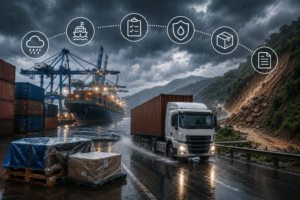


In global logistics, not every disruption begins with a trade policy or geopolitical conflict. Sometimes, it starts with a storm.
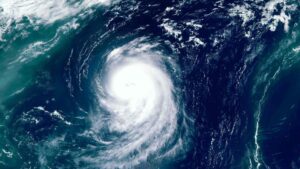
Typhoon Dolphin has made landfall near Yuhuan in China’s Zhejiang province with sustained winds of 151 km/h, making it one of the strongest typhoons to impact China this year. While severe weather events are temporary, their impact on global supply chains can linger for weeks, affecting cargo schedules, port productivity, vessel rotations, and inventory planning.
For businesses that depend on imports from China or export cargo through some of Asia’s busiest trade gateways, the consequences extend far beyond a weather forecast. Delayed sailings, rolled containers, port congestion, and longer transit times can disrupt production schedules and customer commitments long after the skies have cleared.
Understanding these disruptions—and preparing for them—is essential for building resilient supply chains.
Typhoon Dolphin’s Immediate Impact on China’s Logistics Network
Typhoon Dolphin has significantly disrupted operations across eastern China, affecting major ports that collectively handle millions of TEUs annually.
According to operational updates, six major container ports are experiencing severe disruption, including:
- Shanghai (Yangshan & Waigaoqiao)
- Ningbo-Zhoushan
- Qingdao
- Shenzhen (Yantian & Shekou)
- Guangzhou (Nansha)
Beyond the ports themselves, broader transport infrastructure has also been affected. Shipping activity in parts of the Yangtze estuary and delta has been suspended, more than 1,500 flights from Shanghai have been cancelled, and Ningbo Lishe Airport has temporarily halted operations.
For freight forwarders, carriers, and shippers, these disruptions create a cascading effect that extends well beyond the affected region.
Why Port Closures Continue to Affect Cargo After the Storm
Many businesses assume that once a typhoon passes, normal operations immediately resume.
In reality, port recovery is far more complex.
Before Typhoon Dolphin made landfall, terminals were already experiencing pre-storm congestion as vessels accelerated arrivals and exporters rushed cargo through before weather restrictions were imposed.
Once operations resume, ports must first restore pilotage services, resequence vessel berths, clear accumulated yard inventory, and reposition equipment. This creates significant bottlenecks that can persist for several days.
As a result, businesses should expect:
- Vessel bunching as multiple ships arrive simultaneously
- Rolled cargo due to limited vessel capacity
- Delayed berthing schedules
- Increased yard congestion
- Extended turnaround times for containers
Operational recovery often takes considerably longer than the weather event itself.
The Supply Chain Ripple Effect Beyond China
China serves as the manufacturing and export hub for countless global industries.
When major ports such as Shanghai, Ningbo-Zhoushan, Shenzhen, and Guangzhou experience disruption, the impact extends throughout international supply chains.
Manufacturers may face delayed raw material shipments.
Retailers could experience inventory shortages during critical sales periods.
Importers may encounter longer lead times, while exporters face increased uncertainty around sailing schedules.
Ocean carriers often adjust vessel rotations to recover schedules, creating knock-on delays at ports far beyond China.
For businesses operating lean inventory models, even a short disruption can have significant downstream consequences.
How Typhoon Dolphin Could Affect Ocean Freight
Weather-related port disruptions typically trigger several operational challenges across ocean freight networks.
Carriers may omit ports to maintain vessel schedules or revise sailing windows to accommodate congestion. Terminal capacity becomes constrained as containers remain in yards longer than planned, while trucking and inland transport services struggle to maintain normal operations.
These conditions frequently result in:
- Longer transit times
- Increased freight rate volatility
- Delays in container availability
- Higher storage and detention risks
- Reduced schedule reliability
For businesses dependent on predictable shipping schedules, proactive planning becomes essential.
How Importers and Exporters Can Reduce Supply Chain Risk
While weather events cannot be prevented, their impact can be managed through careful planning and close coordination with logistics partners.
1. Confirm Terminal Operating Status Before Dispatch
Before stuffing containers or dispatching cargo to the port, verify gate opening schedules and estimated berth windows with terminals and shipping lines.
Operational conditions can change rapidly during severe weather events.
2. Secure Vessel Space Early
As vessels resume operations, demand for available capacity often exceeds supply.
Booking shipments early improves the likelihood of securing preferred sailings and minimizing delays.
3. Build Additional Transit Time Into Planning
Businesses should anticipate longer transit times for shipments originating from affected Chinese ports.
Adding 7–10 days of contingency into planning can help minimize downstream disruption to inventory and production schedules.
4. Prioritize Critical Shipments
For time-sensitive cargo, businesses should evaluate alternative gateways, multimodal transport options, or air freight where commercially viable.
Flexibility often becomes the most effective mitigation strategy during periods of disruption.
5. Review Cargo Insurance Coverage
Extreme weather events highlight the importance of comprehensive marine cargo insurance.
Businesses should review policy terms carefully to understand coverage relating to storm damage, delays, and associated claims procedures.
Why Freight Forwarders Play a Critical Role During Disruptions
Periods of disruption demonstrate the value of experienced freight forwarding partners.
Beyond arranging transportation, freight forwarders help businesses:
- Monitor evolving port conditions
- Coordinate with shipping lines and terminals
- Recommend alternative routing strategies
- Manage documentation changes
- Identify available vessel capacity
- Optimize LCL (Less than Container Load) consolidation opportunities
- Provide real-time shipment visibility
When schedules become uncertain, timely information and proactive planning become just as valuable as transportation capacity itself.
Building Supply Chains That Can Withstand Disruption
Extreme weather events are becoming an increasingly common operational risk for global supply chains.
Rather than viewing them as isolated incidents, businesses should incorporate climate-related disruptions into broader supply chain resilience strategies.
This includes:
- Diversifying sourcing locations
- Building realistic inventory buffers
- Developing alternative transport options
- Strengthening supplier communication
- Partnering with logistics providers capable of responding quickly to operational changes
Organizations that prepare for disruption recover faster and maintain stronger customer service levels when unexpected events occur.
Preparedness Is the Best Defence Against Supply Chain Disruption
Typhoon Dolphin is another reminder that global supply chains are only as resilient as the plans supporting them.
While storms may be unavoidable, prolonged disruption is not.
Businesses that combine proactive planning with experienced freight forwarding support can reduce delays, protect customer commitments, and navigate uncertainty with greater confidence.
As global trade becomes increasingly complex, resilience is no longer simply a competitive advantage—it has become a core business capability.
Partner With Logistics Experts Who Keep Your Cargo Moving
Whether you’re managing imports from China, optimizing LCL consolidation, or navigating unexpected supply chain disruptions, having the right logistics partner makes all the difference.
Our team continuously monitors port operations, carrier schedules, and global trade developments to help businesses make informed logistics decisions.
Contact us today to build a more resilient, agile, and future-ready supply chain.