
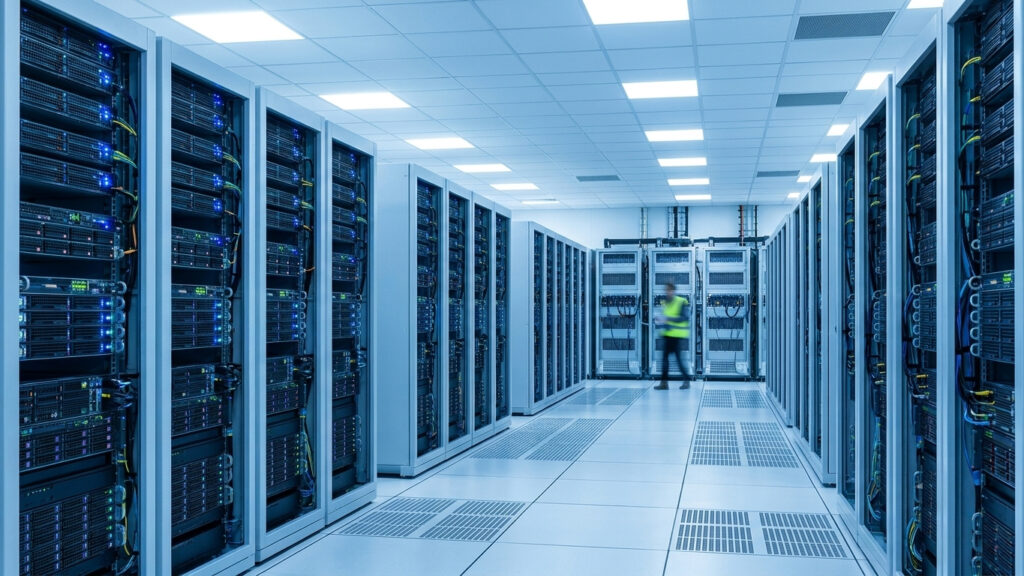
Every ChatGPT prompt, UPI payment, Netflix stream, online purchase, and AI-generated image has one thing in common—they all rely on data centres.
These massive computing facilities have quietly become the backbone of the digital economy. Yet as artificial intelligence accelerates at an unprecedented pace, a new challenge has emerged. Data centres consume enormous amounts of electricity, generate immense heat, and require sophisticated cooling systems to remain operational.
The global race to build AI infrastructure is no longer just about faster processors or smarter algorithms. It’s about finding the right locations to power, cool, and connect the world’s digital future.
India has unexpectedly become one of the biggest beneficiaries of this shift.
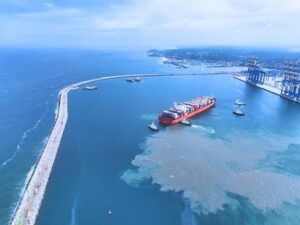
With more than $250 billion committed to new data centre investments in just the past year, India is rapidly transforming into one of the world’s most important AI infrastructure hubs. Coastal cities like Visakhapatnam—already being referred to as “AI-Patnam”—are emerging as strategic destinations for global technology companies building the next generation of computing infrastructure.
For logistics professionals, this transformation represents something even bigger.
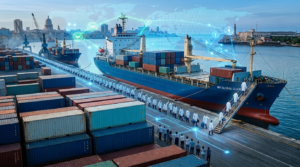
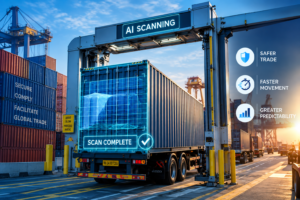
Just as ports move physical cargo, data centres move digital cargo. And increasingly, both depend on the same foundations: infrastructure, connectivity, resilience, and strategic geography.
India’s Biggest Logistics Opportunity May Not Move Containers—It May Move Data
For decades, India’s logistics growth has been driven by manufacturing, exports, ports, and container traffic.
Today, another kind of cargo is beginning to flow.
Data.
Unlike traditional commodities, data travels through fibre-optic cables instead of shipping lanes. Yet the infrastructure supporting both industries is remarkably similar.
Reliable power, high-capacity connectivity, coastal access, industrial land, skilled manpower, and resilient transport networks are equally essential for ports and hyperscale data centres.
This convergence explains why Visakhapatnam has suddenly become one of India’s most strategically important locations.
Google has selected the region for one of its largest AI infrastructure projects outside the United States. Reliance is building its own large-scale campus nearby, while submarine cable investments continue to strengthen India’s international digital connectivity.
The result is an entirely new logistics ecosystem where digital infrastructure becomes as valuable as physical infrastructure.
Why Global Technology Companies Are Investing in India
The surge in investment is not accidental.
Three structural trends are driving India’s emergence as a global AI infrastructure destination.
1. Data Sovereignty Is Creating Domestic Demand
Governments around the world increasingly require sensitive information to remain within national borders.
As India strengthens its digital governance framework, organizations require domestic computing infrastructure capable of securely storing and processing enormous volumes of data.
The demand for local data centres is therefore growing alongside the country’s expanding digital economy.
2. Artificial Intelligence Requires Massive Computing Capacity
AI models demand exponentially greater computing resources than traditional applications.
Training advanced AI systems requires thousands of high-performance processors operating continuously inside specialized data centres.
Countries that develop domestic AI infrastructure gain greater technological independence while reducing reliance on overseas computing resources.
3. Data Centres Create Entire Industrial Ecosystems
Modern data centres extend far beyond server rooms.
Each facility generates demand for:
- Advanced cooling technologies
- High-voltage electrical infrastructure
- Power management systems
- Server manufacturing
- Optical networking equipment
- Submarine cable connectivity
- Construction materials
- Industrial logistics services
Like manufacturing clusters, data centre hubs stimulate investment across multiple supporting industries.
The Rise of Digital Trade Routes
Perhaps the most fascinating aspect of this transformation is the emergence of entirely new global trade corridors.
Historically, shipping lanes connected manufacturing centres with consumer markets.
Today, submarine fibre-optic cables perform a similar function for digital commerce.
Data generated in India may travel to Australia, the Middle East, Europe, or North America within milliseconds through undersea cable networks.
These digital trade routes increasingly resemble traditional maritime corridors, positioning India not only as a manufacturing hub but also as a strategic transit point for global information flows.
For logistics professionals, it is a powerful reminder that infrastructure is evolving.
The future economy will move both containers and data across interconnected global networks.
Could India Become the World’s Digital Safe House?
An emerging concept attracting significant attention is that of data embassies.
Much like a physical embassy enjoys special legal protections, a data embassy allows a country or organization to securely store critical digital assets within another nation under agreed legal frameworks.
If implemented successfully, India could evolve into one of the world’s most trusted destinations for secure international data storage.
Such a role would strengthen India’s position not only in digital infrastructure but also within global geopolitical and economic networks.
The Hidden Challenge: AI Doesn’t Just Consume Electricity—It Consumes Water
While discussions often focus on computing power, one of the biggest operational challenges lies elsewhere.
Cooling.
Servers generate enormous amounts of heat.
Without efficient cooling systems, even the world’s fastest processors become unusable.
A single large data centre can consume millions of litres of water annually to maintain safe operating temperatures.
As AI adoption accelerates worldwide, balancing technological growth with environmental sustainability has become a critical consideration.
Communities understandably ask an important question:
Can large-scale digital infrastructure grow without placing unsustainable pressure on local resources?
Why Coastal India Offers a Strategic Advantage
India’s geography provides an important answer.
Locating data centres near coastal regions creates opportunities to integrate alternative water and energy solutions.
These include:
- Seawater desalination
- Wastewater recycling
- Renewable energy integration
- Coastal cooling technologies
Combined with modern liquid-cooling systems capable of dramatically reducing freshwater consumption, these innovations allow data centres to operate more sustainably than earlier generations of facilities.
Rather than competing directly with municipal water supplies, future campuses are increasingly designed around diversified resource strategies.
Innovation Is Taking Data Centres Below the Ocean
As cooling challenges intensify, engineers have begun exploring unconventional solutions.
One of the most intriguing is underwater data centres.
By placing sealed computing modules beneath the ocean, operators leverage naturally cold seawater to dissipate heat far more efficiently than conventional air-based cooling systems.
These facilities require minimal land, consume significantly less freshwater, and reduce overall energy consumption.
While still an emerging technology, underwater data centres demonstrate how engineering innovation is redefining the future of digital infrastructure.
For coastal nations like India, these developments offer valuable insights into long-term sustainable infrastructure planning.
Could the Future of Data Centres Be in Space?
If underwater facilities sound futuristic, orbital data centres push the idea even further.
Technology companies have explored concepts involving satellite-based computing powered entirely by solar energy.
Continuous sunlight offers abundant renewable power, while space appears to offer naturally cold operating conditions.
Yet reality remains more complicated.
Maintaining computing hardware in orbit introduces enormous engineering challenges, including equipment maintenance, launch costs, radiation exposure, and thermal management within a vacuum.
For the foreseeable future, the world’s AI infrastructure will remain firmly grounded on Earth.
Which makes today’s investments in India even more significant.
What This Means for Logistics and Supply Chains
Although data centres may seem unrelated to freight forwarding, they are becoming deeply connected to global logistics.
Building hyperscale campuses requires the movement of enormous quantities of equipment, including servers, electrical systems, cooling units, transformers, networking hardware, steel structures, and specialized construction materials.
Much of this equipment is imported through complex international supply chains.
This creates growing demand for:
- International freight forwarding
- Project cargo logistics
- Ocean freight
- Customs clearance
- Warehousing
- Multimodal transportation
- Time-sensitive equipment deliveries
As India’s AI ecosystem expands, logistics providers will play an increasingly strategic role in supporting the industry’s growth.
Why Infrastructure Will Define the AI Economy
The AI revolution is often described as a software revolution.
In reality, it is equally an infrastructure revolution.
Success will depend on countries capable of delivering reliable electricity, sustainable water management, resilient logistics networks, advanced connectivity, skilled talent, and supportive public policy.
These are precisely the foundations that determine whether large-scale industrial ecosystems succeed.
For India, the opportunity extends far beyond hosting data centres.
It lies in becoming a global hub for digital infrastructure, advanced manufacturing, and intelligent supply chains.
India’s Next Great Export May Be Computing Power
For decades, India exported software services to the world.
The next chapter may be far more ambitious.
By investing in AI infrastructure, digital connectivity, renewable energy, and logistics capabilities, India is positioning itself to become one of the world’s leading centres for computing capacity.
Just as ports transformed global merchandise trade, hyperscale data centres may transform global digital trade.
And behind every successful digital economy will be something remarkably familiar:
Strong infrastructure.
Reliable logistics.
And supply chains built to move not just goods—but the future itself.
Build Supply Chains Ready for Tomorrow’s Infrastructure Economy
The rapid expansion of AI infrastructure will reshape global trade, industrial investment, and logistics networks.
Businesses require logistics partners capable of supporting both traditional cargo movements and the increasingly complex supply chains behind next-generation industries.
Whether you’re importing mission-critical equipment, managing project cargo, leveraging LCL consolidation, or optimizing international freight forwarding, partnering with experienced logistics experts ensures your business stays ahead of changing global trade dynamics.
Connect with our team to discover how intelligent logistics solutions can power your business in the age of AI.