
Can Smarter Logistics Save Our Lungs? The Beijing, Delhi, and Global AQI Revolution
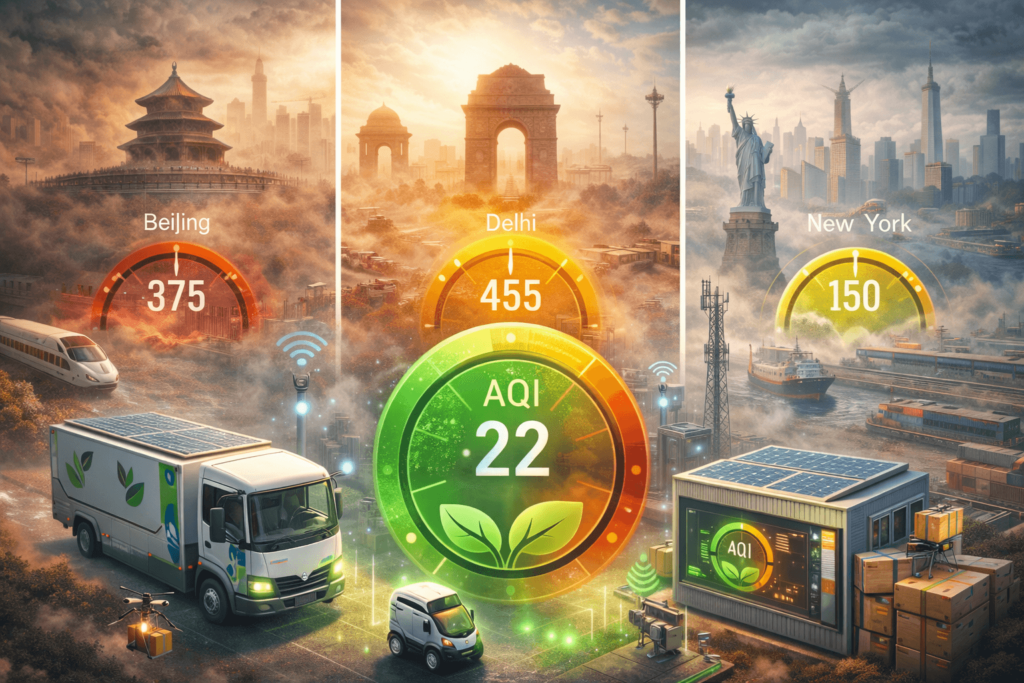
Urban air pollution isn’t just about factory smokestacks—it’s also about how people and goods move. Both cargo logistics and passenger transport hugely influence a city’s Air Quality Index (AQI). Recent global experiences—from China’s trailblazing efforts to bold policies in Delhi—prove that reimagining logistics can genuinely clear the air.
The Scale of the Problem: Cargo & Passenger Transport’s Impact on AQI
Road transport contributes 20–30% of PM2.5 and PM10 concentrations in Indian cities, with congestion from trucks and passenger vehicles worsening pollution spikes. Delhi alone moves about 10 lakh tonnes of freight daily via nearly 200,000 vehicles, a fifth of which just pass through—creating severe congestion and pollution hotspots.
Historically, the lack of organized warehousing and logistics hubs funnels heavy trucks and delivery vehicles into dense city centers, compounding emissions and traffic gridlocks. Meanwhile, aging diesel fleets in public transport and last-mile connectivity add to the air quality crises.
Lessons from China’s EV Revolution and Urban AQI Gains
China sets the world’s leading example of how clean logistics transformations can improve air:
- A 10% increase in Battery Electric Vehicle (BEV) usage correlates with an average 1.1% AQI decline in key Chinese cities.
- Beijing and others saw PM2.5 and PM10 levels drop by up to 0.5% and 0.2% respectively, while SO2 and CO fell as much as 1.4% and 0.7%.
- In Beijing, replacing over 70% of city buses with zero-emission electric buses dramatically enhanced AQI and cut carbon emissions per 100km by half compared to diesel buses.
These moves not only cleaned the air but also revitalized public trust in urban transport.
Global Success Stories: Bogotá, London, and More
Cities worldwide provide inspiring logistics reform examples:
- Bogotá’s Bus Rapid Transit (BRT) overhaul cut transport emissions and trimmed PM2.5 pollution by 75% during targeted phases.
- London’s Ultra Low Emission Zone and gas fleet transition slashed SO2 from over 400 µg/m³ to less than 50 µg/m³ over decades.
- Morbi, India, achieved a 75% reduction in PM2.5 after urban delivery vehicles switched from coal to natural gas and banned the most polluting trucks.
India’s Roadmap: Delhi’s 2025 Logistics Policy Push
Indian metros like Delhi are adopting global best practices with ambitious plans including:
- Moving warehouses outside city centers
- Creating Urban Consolidation and Logistics Distribution Centres (UCLDCs) to pre-group freight before city entry
- Restricting last-mile delivery to electric and CNG vehicles
- Incentivizing green energy warehouses, 24/7 logistics parks, digital delivery management, and commercial parking solutions
These initiatives aim to slash truck trips by thousands daily, bringing major AQI improvements at hotspots like Azadpur, Ghazipur, and Karol Bagh.
Lessons and Future Directions: How Logistics Powers Clean Urban Futures
Success depends on blending data-driven logistics, robust policy, and consistent public investment:
- Real-time cargo tracking reroutes deliveries to avoid pollution hotspots.
- Cross-docking and freight consolidation (common in developed economies) reduce fuel usage by minimizing empty runs.
- Enforcing clean fleets, restricting polluting vehicles, and providing green incentives is key for regulatory success.
Estimates suggest cities integrating such comprehensive logistics could lower AQI by 3–10% within a few years in critical urban zones.
The Power of Logistics in the Fight for Clean Air
Cities worldwide demonstrate the undeniable link between how people and goods move and the fight against polluted air. Inspired by global successes and native reforms, Indian urban centers stand ready to champion the AQI revolution.
Cleaner fleets, smarter freight flows, and better public transit can collectively create breathable air and sustainable, vibrant cities.