
Beauty Logistics Uncovered: How Korean Skincare, Brazilian Hair & Celebrity Brands Travel the World
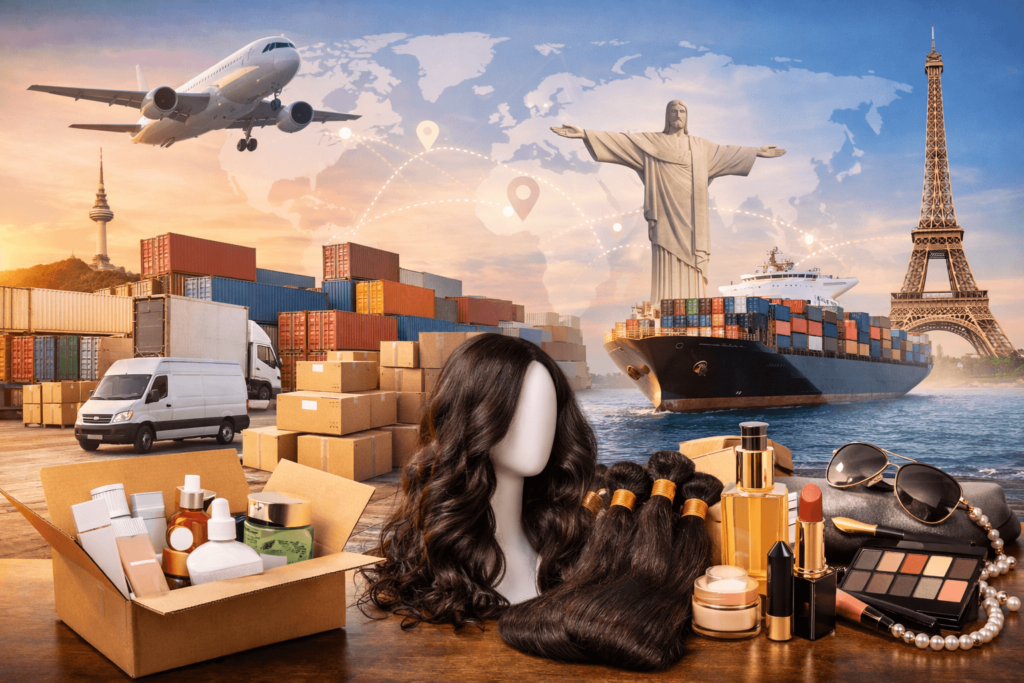
The next time you pick up a Korean glow serum, a Brazilian keratin treatment, or a celebrity beauty product, pause for a moment. Behind that sleek packaging lies a fascinating global logistics story powered by freight forwarders, LCL consolidators, cold chain experts, and multimodal shipping networks.
The global cosmetics market, currently valued at over $330 billion, is projected to grow to nearly $545 billion by 2033. As celebrity beauty brands surge and cross-border e-commerce explodes, the logistics behind beauty products has become one of the most sophisticated supply chains in the world.
From Seoul to Mumbai, São Paulo to San Francisco, this is the journey of beauty powered by global freight movement.
The Celebrity Beauty Boom Driving Global Logistics
Over the past few years, celebrity-led brands have disrupted the traditional cosmetics industry, combining personal branding, social media influence, and global sourcing to scale at unprecedented speed.
When Katrina Kaif launched Kay Beauty in 2019, it quickly crossed ₹100 crore in revenue within its first year. By 2025, the brand had expanded to international markets like the UAE and the UK. The brand blends formulations in facilities around Mumbai but sources high-performance Korean actives via air freight from Seoul. These ingredients are then distributed across India to more than 1,600 stores and online channels within 7–10 days.
Similarly, global brands rely heavily on structured supply chains:
- Fenty Beauty by Rihanna, valued at nearly $2.8 billion, manufactures close to 70% of its products in large-scale Chinese factories before distributing them to over 150 countries via ocean and air freight.
- Kylie Cosmetics, built from a small startup into a $420 million empire, depends on manufacturing hubs in the United States and China, supported by strong fulfillment networks for direct-to-consumer shipping.
- Rare Beauty by Selena Gomez entered India in 2025, leveraging production partners in India and the US to serve luxury retail markets.
- Huda Beauty and Anomaly by Priyanka Chopra combine global sourcing with regional production, reflecting the growing complexity of beauty logistics.
These brands rely on a mix of air freight for high-value or fragile goods, and Full Container Load (FCL) and LCL ocean shipping for bulk movement, ensuring efficiency, speed, and product safety.
Global Production Hubs Powering the Beauty Supply Chain
Beauty products don’t originate from one location. They are created in specialized global clusters that have become dominant exporters in specific categories.
Brazil: The Haircare Capital
Brazil leads innovation in keratin treatments and curl-focused formulations, exporting products from São Paulo via Santos Port. In 2025, Brazil’s natural and organic hair segment grew by approximately 15%, driven by global demand.
South Korea: Skincare Innovation Hub
South Korea continues to lead the K-beauty wave, exporting $3.61 billion worth of cosmetics in just the first four months of 2025. Products such as sheet masks, essences, and sunscreens are shipped worldwide using temperature-controlled logistics to preserve product integrity.
China: Global Manufacturing Backbone
China produces nearly 70% of the world’s private label cosmetics. Massive production clusters in Guangzhou and Zhejiang manufacture more than one billion units annually, supporting both premium and mass-market brands.
France: Luxury Beauty Export Leader
France remains the global leader in perfumes and premium cosmetics, exporting luxury products worldwide through carefully controlled distribution networks.
India, US & Japan: Emerging Innovation Centres
India is becoming a strong player in clean beauty manufacturing. The US and Japan lead in tech-enabled skincare devices and personalized beauty solutions.
Where the Demand Comes From: Top Beauty Markets
The demand for beauty products is massive and growing across major economies:
- United States: $89.7 billion annual spend
- China: $58.3 billion
- Japan: $36.9 billion
- Brazil: $34.7 billion
- India: $25+ billion and rapidly rising
India is emerging as a key growth market, driven by Gen Z consumers who account for nearly 40% of purchases. Women contribute to approximately 62.6% of global demand, while the Asia-Pacific region commands nearly 45.5% of the global market share.
During Black Friday 2025 in the US, beauty e-commerce sales surged by 25% year-on-year, highlighting how impulse-driven online buying is reshaping distribution strategies.
The High-Stakes Journey of Beauty Products
Beauty logistics is a precision-driven process involving multiple modes of transport and strict handling requirements.
A typical journey may look like this:
- Brazilian hair products begin in São Paulo factories and move via ocean freight to the US and Europe over 4–6 weeks, followed by express distribution for last-mile delivery.
- Korean skincare products are shipped via temperature-controlled air freight to preserve pH balance and ingredient stability.
- Celebrity brands often move ingredients globally—Kay Beauty sources actives from Seoul to Mumbai within 7–10 days to support fast D2C launches.
However, challenges remain:
- Fragile packaging like glass bottles leads to an estimated 2% transit breakage.
- Regulatory restrictions, such as Europe’s bans on over 1,300 cosmetic chemicals, can slow cross-border trade.
- Cold chain shipments can cost up to three times more than standard freight due to strict handling requirements.
To address these challenges, brands now rely on:
- AI-optimized route planning
- Blockchain for ingredient traceability
- Multimodal transport combining air and sea freight
- LCL consolidation for smaller, frequent shipments
For freight forwarders and consolidators, this sector represents a growing, high-value opportunity.
The Future of Beauty Logistics
The beauty industry is expected to reach nearly $664 billion by 2026, driven by rising e-commerce adoption and personalization trends.
Key logistics trends shaping the future include:
- E-commerce growth of nearly 30% year-on-year
- Supermarkets and retail stores still accounting for 35.6% of distribution
- Clean and vegan formulations commanding nearly 60% consumer preference
- AI-led product development reducing R&D timelines by up to 40%
The supply chain itself is evolving rapidly:
- Refillable packaging reducing waste by 30%
- Drone deliveries emerging in urban markets like India
- Arctic shipping routes potentially reducing Asia-Europe transit by 10 days by 2030
- EU regulations pushing for 70% circular packaging adoption
Major global brands are also increasingly exploring India as a manufacturing hub, drawn by its scale, talent, and growing domestic demand.
Why Beauty Logistics Matters for Freight Forwarders and LCL Consolidators
Beauty is no longer just a retail category — it is a high-value, high-precision global supply chain.
From temperature-controlled transport and regulatory compliance to multimodal shipping and fast distribution cycles, the industry depends heavily on logistics partners who can ensure reliability, speed, and product safety.
For freight forwarders and LCL consolidators, the beauty sector offers:
- Consistent, high-frequency shipments
- Growing demand for consolidation services
- Opportunities in cold chain logistics
- Strong cross-border e-commerce volumes
As global beauty brands scale, the role of logistics providers becomes even more critical in ensuring products reach shelves and homes in perfect condition.
Behind every glow serum, foundation, and hair treatment lies a carefully engineered logistics journey connecting continents, factories, ports, and consumers.