
You may not live near a conflict zone. You may not follow global geopolitics closely.
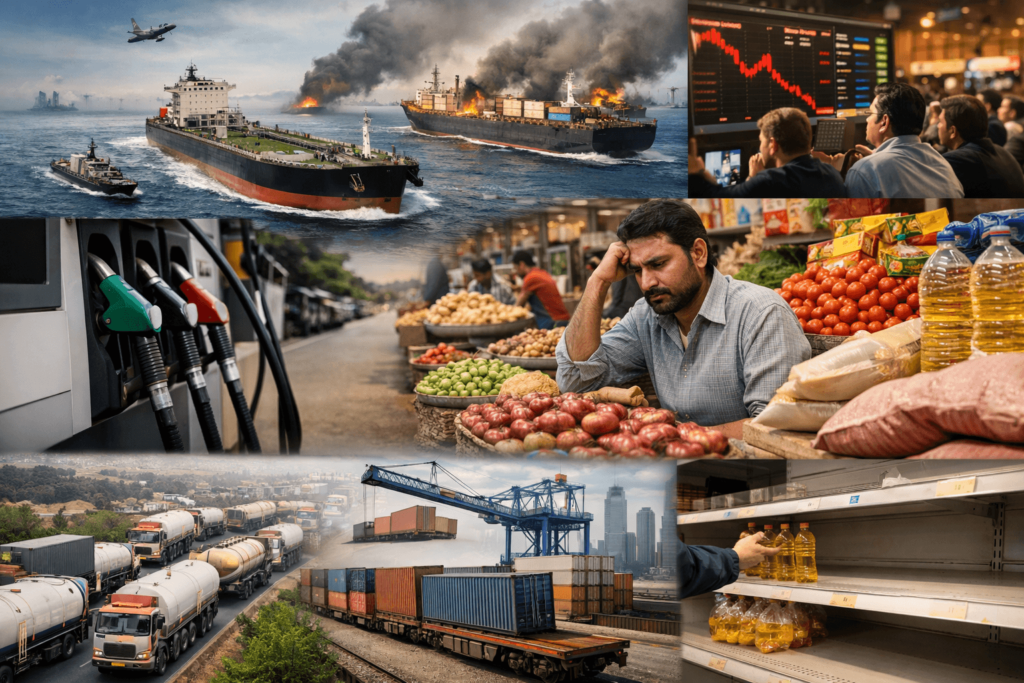
Yet your fuel bill rises. Grocery prices spike. Deliveries get delayed.
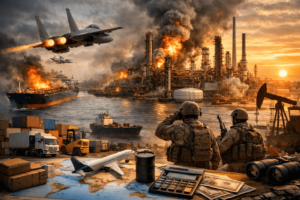
That’s because in today’s hyper-connected world, war is no longer confined to battlefields. It is a supply chain disruption, a logistics crisis, and a global trade shock — impacting businesses and households alike.
For freight forwarders, LCL consolidators, and global trade stakeholders, understanding how conflict reshapes logistics is critical to building resilient supply chains.
The Strait That Powers the World
At the center of global energy movement lies the Strait of Hormuz — a narrow 33-kilometer-wide passage between Iran and Oman.
Every single day:
- 21 million barrels of oil pass through this route
- That’s nearly 20% of global petroleum trade
If this chokepoint is disrupted — even briefly:
- Oil prices can spike within 48 hours
- Tanker insurance premiums surge
- Fuel shortages ripple across Asia, Europe, and beyond
For India, which imports ~85% of its crude oil, this translates directly into:
- Higher petrol and diesel prices
- Increased logistics and trucking costs
- Rising prices of everyday goods
The Red Sea Crisis: When Shipping Routes Break
Before even reaching Hormuz, global trade has already been impacted by disruptions in the Red Sea.
Recent attacks forced container vessels to reroute via the Cape of Good Hope, leading to:
- 10–14 days additional transit time
- Increased fuel consumption
- Higher freight rates
- Equipment shortages and scheduling disruptions
For freight forwarders and LCL consolidators, this means:
- Unpredictable sailing schedules
- Increased cost of consolidation
- Delays in cargo delivery across Europe–Asia trade lanes
These costs don’t stay within the logistics ecosystem — they are passed on to businesses and ultimately to consumers.
The Domino Effect on Global Trade
According to the World Trade Organization, even a 10% sustained increase in shipping costs can significantly reduce global trade growth.
Emerging economies like India, Bangladesh, and Egypt are hit the hardest due to:
- High dependence on imports
- Limited foreign exchange buffers
- Price-sensitive consumer markets
For exporters, rising logistics costs reduce competitiveness.
For importers, they inflate landed costs and disrupt demand cycles.
How War Impacts Everyday Life in India
When global supply chains are disrupted, the impact is immediate and personal.
Energy & Fuel
- LPG shortages in Tier 2 and Tier 3 cities
- Rising petrol and diesel prices
- Increased transportation costs
Food Inflation
- Higher trucking costs raise mandi prices
- Fertilizer shortages reduce agricultural output
- Staple food prices rise across urban and rural markets
Consumer Goods
- Delayed imports lead to stock shortages
- Price increases across categories — from electronics to appliances
A geopolitical conflict thousands of kilometers away can directly affect the cost of living in Indian households.
Europe’s Energy Lessons & Global Ripple Effects
Europe has already experienced a major energy shock during the Russia-Ukraine Gas Crisis 2022.
Today, renewed instability in the Middle East poses fresh risks:
- LNG shipments from Qatar pass through high-risk zones
- Insurance costs increase for energy cargo
- Strategic reserves are being rebuilt
Beyond energy, countries like Iran and Iraq are key suppliers of:
- Fertilizers
- Petrochemicals
Disruptions here lead to:
- Lower agricultural yields
- Rising global food prices
- Inflation across multiple economies
Panic Buying & Market Instability
Every supply disruption triggers a predictable response: panic buying.
Consumers begin stockpiling essentials like:
- Cooking oil
- Rice and flour
- Fuel
While individually rational, this behavior creates:
- Artificial shortages
- Supply chain stress
- Price volatility
In today’s digital world, social media accelerates panic faster than supply chains can respond.
Shifting Financial Power: Winners & Losers
Geopolitical instability doesn’t just impact goods — it reshapes financial ecosystems.
Cities like Dubai, long seen as stable global hubs, face proximity risks during regional conflict.
This opens opportunities for alternative centers like:
- Singapore — geographically distant and highly stable
- Riyadh — emerging as a new financial powerhouse
As capital shifts, trade financing, insurance, and logistics investments follow — impacting global supply chain flows.
The Rise of Alternative Trade Corridors
To reduce dependence on vulnerable maritime routes, countries are investing in new trade infrastructure.
One such initiative is the India-Middle East-Europe Economic Corridor.
This corridor aims to:
- Connect Indian ports to Europe via Middle Eastern rail networks
- Reduce reliance on chokepoints like Hormuz and the Red Sea
- Improve transit efficiency and supply chain resilience
Similarly, Iraq’s development of the Grand Port of Al-Faw signals a shift toward becoming a regional logistics hub.
For freight forwarders, these developments open new routing strategies and multimodal opportunities.
What This Means for Freight Forwarders & LCL Consolidators
In a volatile geopolitical environment, logistics providers must evolve beyond execution into strategy.
Key Implications:
1. Route Diversification
Avoid overdependence on single shipping lanes by developing alternative routing options.
2. Flexible Consolidation Models
Adjust LCL planning to accommodate delays, disruptions, and cost fluctuations.
3. Risk Management & Insurance Advisory
Help clients navigate rising insurance costs and geopolitical risks.
4. Multimodal Integration
Leverage rail, road, and coastal shipping to bypass high-risk maritime zones.
5. Real-Time Visibility
Provide clients with transparency to manage expectations and inventory planning.
Building Resilient Supply Chains for the Future
Globalisation has connected economies like never before — but it has also made them interdependent and vulnerable.
To prepare for future disruptions, businesses must focus on:
- Diversified sourcing strategies
- Strategic inventory planning
- Alternative trade corridors
- Digital supply chain visibility
- Sustainable and efficient logistics models
For freight forwarders and LCL consolidators, this is an opportunity to become strategic partners in resilience, not just service providers.
The Bottom Line
War today is not distant. It is embedded in the cost of fuel, the price of food, and the availability of goods.
It is a logistics event. A supply chain shock. A global economic ripple.
In a world where trade routes define economic stability, the ability to adapt, reroute, and optimize logistics is what separates disruption from resilience.
Because when supply chains break — everyone feels it.